March Coffee of the Month: Peru Café Femenino
What Makes Peruvian Coffee Worth Knowing
Peru doesn't get the same airtime as Colombia or Brazil when it comes to coffee conversations. But it probably should. It's consistently ranked among the top ten coffee-producing countries in the world, and — perhaps more notably — it's widely considered the world's leading producer of certified organic coffee. That combination of scale and commitment to organic farming is genuinely unusual, and it shapes the character of what ends up in your cup.
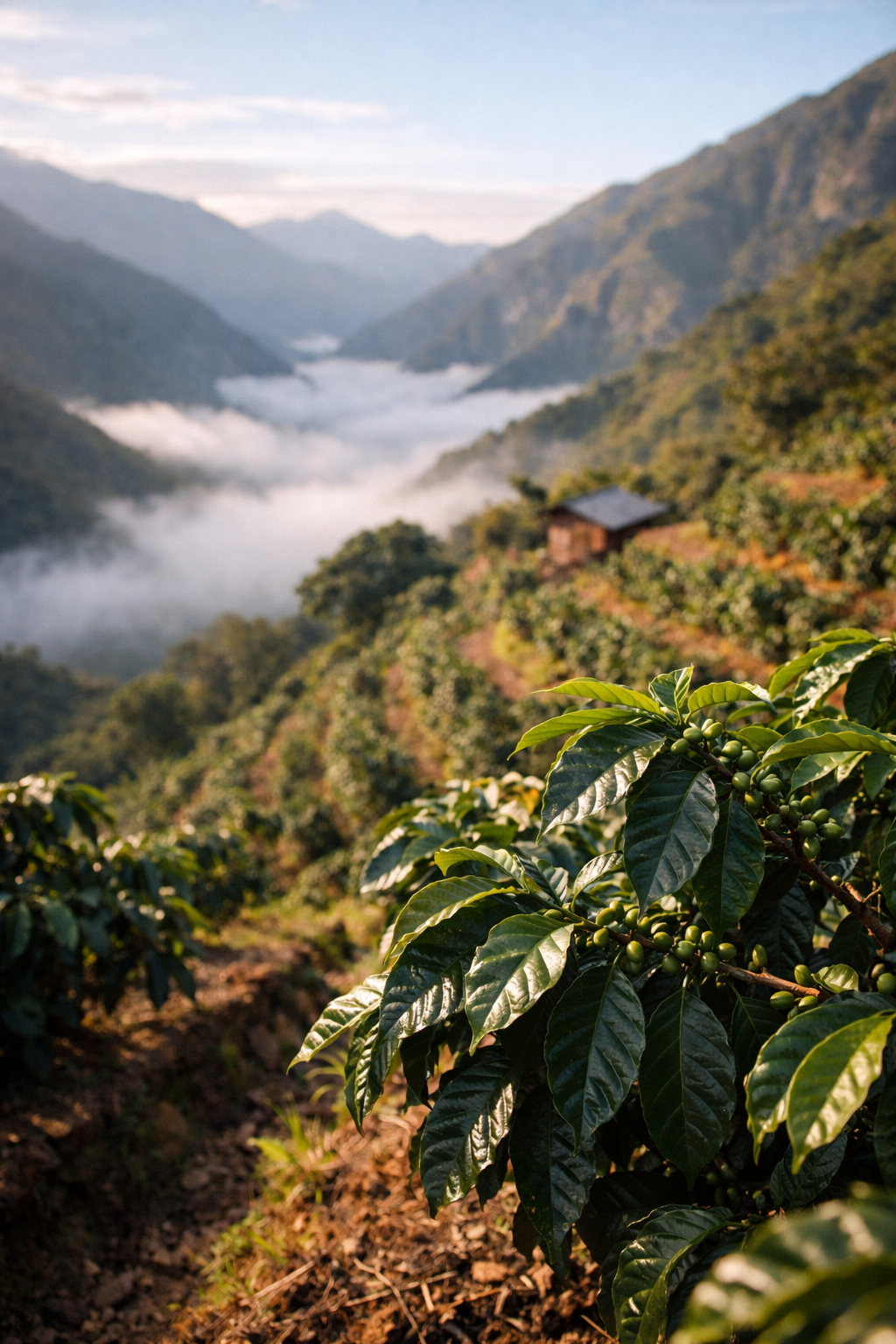
The geography helps explain a lot. The Andes run the length of the country, creating a patchwork of microclimates and elevations — from around 1,000 meters all the way past 2,500 meters above sea level in some regions. Nearly all of Peru's coffee is Arabica, and much of it is grown on small family farms, averaging just a few acres, intercropped with shade trees, bananas, and corn. That kind of farming produces coffee more slowly and carefully than large-scale industrial operations, and the results tend to show up in the cup.
Peruvian coffees are known for being clean, balanced, and approachable. The classic profile leans toward chocolate and nuts, with mild acidity — but at higher elevations, with careful processing, you start to see brighter citrus notes, more complexity, and a sweetness that holds through the finish. The variety of growing regions — the northern highlands of Cajamarca and Amazonas, the central Chanchamayo valley, the southern regions around Cusco and Puno — means no two Peruvian coffees are quite the same.
One area where Peru stands out structurally is the cooperative model. Because most farms are small, cooperatives have become the backbone of quality control, export logistics, and farmer support. Organizations like CECANOR don't just aggregate coffee — they invest in road infrastructure, local storage, technical training, and certification support for their member farmers. That infrastructure is part of why Peru has been able to build a credible specialty coffee sector rather than just producing commodity volumes.
This Month: CECANOR & Café Femenino
Our March selection comes from CECANOR — Central de Cafetaleros del Nororiente — a cooperative with producers spread across more than 70 communities in northern Peru, spanning Cajamarca, Amazonas, and Lambayeque. The coffee is grown at elevations between 1,000 and 2,500 meters, fully washed and sun-dried, using selective hand-picking of only fully ripe cherries.
This particular lot carries the Café Femenino designation, which has a specific history worth knowing. In 2004, 464 female coffee producers within CECANOR organized to address a real and persistent problem: women had always been central to coffee production in Peru, but economic control — land titles, income — had traditionally sat with men. The Café Femenino cooperative was formed to change that, giving women producers direct ownership and economic stake in their work. Two decades later, the women of CECANOR take visible pride in that legacy, and in raising daughters who expect to step into leadership roles in their communities.
The Café Femenino Foundation has continued working with CECANOR since 2005, supporting projects ranging from community meeting infrastructure to education and women's health resources in these remote highland communities — areas where government services and road access are limited.
In the Cup
This is a medium roast, and it drinks like one — approachable but not flat. Expect dark chocolate and bright citrus upfront, with a maple syrup sweetness that rounds out the finish. Medium body, balanced acidity. It's the kind of coffee that works well black, brewed simply, and holds up across different brewing methods.
Origin: Peru Cooperative: CECANOR (Café Femenino) Varietals: Tipica, Catimor, Bourbon, Gran Colombia, Villa Sarchi Elevation: 1,000–2,500 masl Process: Fully Washed, Sun Dried Roast: Medium
Share and get 15% off!
Simply share this product on one of the following social networks and you will unlock 15% off!