If you've ever stood at a coffee bar staring at the menu wondering what actually makes espresso different from a regular cup of coffee you're not alone. Espresso has a reputation for being complicated, fussy, or reserved for coffee snobs. It's not. But understanding what it actually is, and why the quality of your beans matters more than anything else, will change the way you drink coffee.
Let's break it all the way down.
What Is Espresso?
Here's the most important thing most people get wrong: espresso is not a type of bean. It's not a roast level. It's not even a special kind of coffee. Espresso is a brewing method.
Specifically, it's the process of forcing hot water through finely ground coffee under high pressure, typically around 9 bars, in a short window of roughly 25 to 30 seconds. That pressurized extraction pulls out a highly concentrated, intensely flavored shot of coffee that is richer, thicker, and more aromatic than what you'd get from a drip machine or French press.
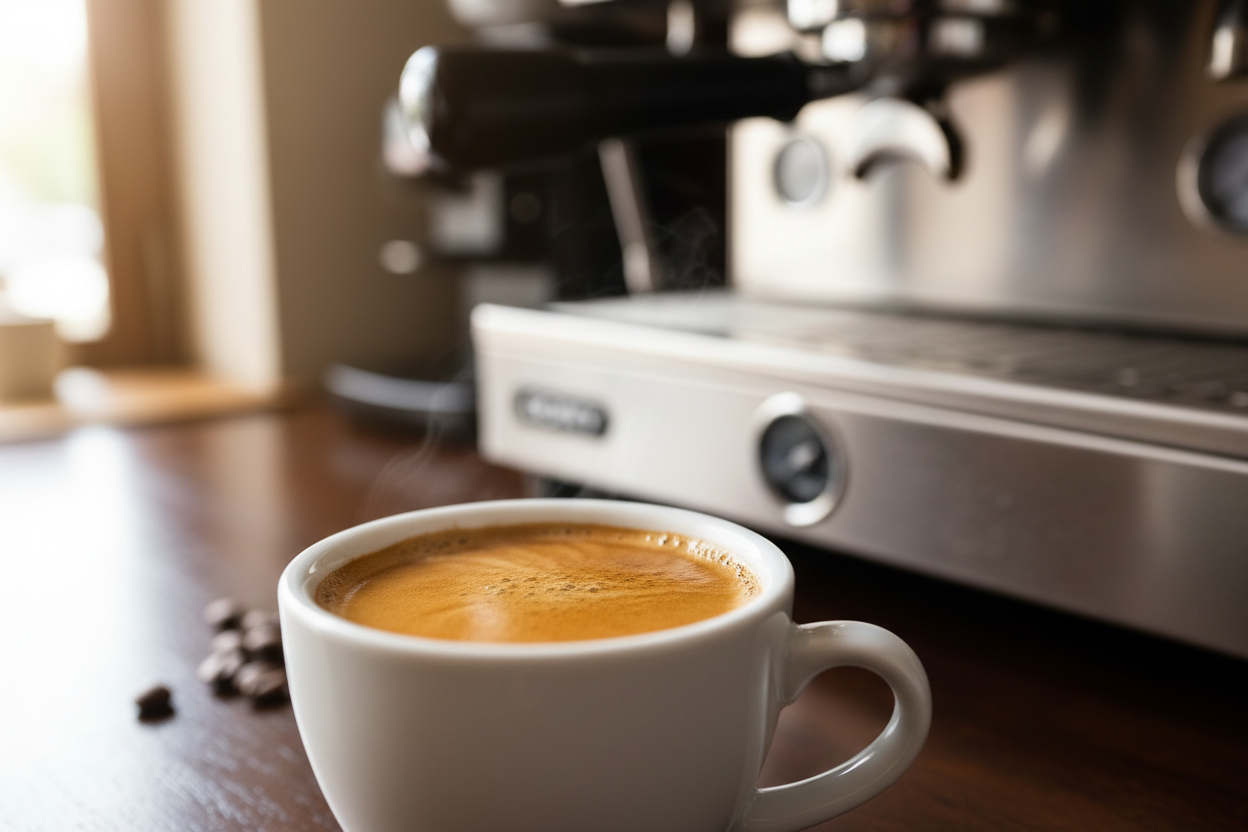
What comes out of that process is typically 1 to 2 ounces of liquid that carries the full flavor signature of the bean: bright acidity, deep body, and a layer of golden-brown foam on top called crema. That crema isn't just for looks. It's formed when pressurized water emulsifies the natural oils in the coffee and forces out CO2 gas. It's a sign of good extraction and fresh beans, and it carries a lot of the aroma you experience before the first sip.
So when someone says "espresso roast" on a coffee bag, they're not describing a different species of bean. They're telling you that those beans were selected and roasted to perform well under pressure. Any coffee can technically be brewed as espresso but not every coffee produces a great result.
Espresso vs. Drip Coffee: What's Actually Different?
Most people drink drip coffee water pours or drips slowly through ground coffee by gravity, and you end up with a larger volume of a lighter-bodied brew. It's forgiving, consistent, and great for a 12-ounce morning cup.
Espresso flips that model entirely. Instead of gravity and time doing the work, pressure and precision do. Here's how the two compare:
| Drip Coffee | Espresso | |
|---|---|---|
| Brew Time | 4–6 minutes | 25–30 seconds |
| Serving Size | 8–12 oz | 1–2 oz |
| Pressure | None (gravity) | ~9 bars |
| Body | Light to medium | Full, syrupy |
| Caffeine per oz | Lower | Higher |
| Grind Size | Medium | Very fine |
One common misconception: people assume espresso has more caffeine than drip coffee. Per ounce, yes espresso is far more concentrated. But a typical double shot (2 oz) has roughly 120–130mg of caffeine, while a full 12-ounce cup of drip coffee can contain 150–200mg. If you're drinking lattes or cappuccinos, you're getting one or two shots in a larger drink, so the total caffeine is often similar to or less than a standard cup of coffee.
The reason espresso feels stronger isn't just caffeine it's the concentration of flavor compounds, the oil content, and the intensity of the extraction.
Espresso Roast Profiles: What the Roast Level Actually Does
Here's where things get interesting for specialty coffee drinkers.
Roast level dramatically changes how a coffee behaves under espresso extraction. And this is where most mass-market coffee brands get it wrong they default to dark roasts and call it a day, masking the natural character of the bean with roast flavor. Specialty coffee takes a different approach.
Dark Roasts are the traditional choice for espresso. They produce bold, low-acid shots with a heavy body and notes of dark chocolate, caramel, and smokiness. The oils developed during a long roast contribute to thick crema and a full mouthfeel. They're forgiving to extract and deliver the classic espresso bar experience. The tradeoff? Dark roasting can push out the unique flavors of the bean's origin you taste the roast more than you taste the coffee itself.
Medium and Medium-Dark Roasts are the sweet spot for most specialty espresso drinkers. They hit the caramelization point that builds sweetness and body, while still preserving enough of the bean's natural origin characteristics fruit notes, regional earthiness, or floral complexity. These roasts produce excellent crema, stand up beautifully in milk-based drinks, and reward you with layers of flavor that darker roasts can't offer.
Light Roasts as espresso are a more advanced experience. They preserve the most origin character, bright acidity, fruit, floral notes, but they require precise extraction and are less forgiving on a machine. They can produce stunning results in the right hands, but they're not a great starting point for beginners.
The takeaway: specialty coffee espresso is not the one-note blast of bitterness you might expect. A well-roasted, properly extracted shot from quality beans is complex, clean, and layered even naturally sweet.
Why Specialty Coffee Is the Right Choice for Espresso
Most grocery store coffee is commodity-grade. It's sourced from mixed, low-altitude farms, roasted months before you buy it, and blended to achieve consistency — not quality. It passes through too many hands, sits too long, and arrives at your machine already stale.
Specialty coffee operates by a completely different standard. The Specialty Coffee Association grades green (unroasted) coffee on a 100-point scale. Only beans scoring 80 or above qualify as specialty grade meaning they're evaluated for defect-free processing, traceability to a specific farm or region, and cup quality that stands on its own.
What that means in practical terms for you:
- Fresher beans. Specialty roasters roast in small batches and ship quickly. Coffee flavor degrades fast after roasting specialty coffee gets to you when it's actually at peak.
- Traceable origins. You know where the coffee came from, often down to the farm, the altitude, and the processing method. That's not marketing it's quality control.
- No filler, no masking. Commodity roasters use dark roasting to hide defects. Specialty roasters use more precise roast profiles because the beans are good enough to let speak for themselves.
- Better espresso. Higher-quality beans with more developed natural sugars produce better crema, more complex flavor, and a cleaner finish than commodity blends.
When you're spending money on an espresso machine even an entry-level one it makes no sense to run cheap beans through it. The machine is only half the equation.
Our Recommendation: Chief Hutch Honduras Single Origin
If you're exploring specialty espresso for the first time, or if you want a reliable go-to that works as a straight shot or in a milk drink, we recommend Chief Hutch Honduras Single Origin.
Here's why it works so well for espresso:
Origin: Corquin Region, Honduras. Honduras has become one of specialty coffee's most respected origins over the last decade. The Corquin region produces high-altitude beans with naturally structured acidity and dense flavor development exactly the kind of bean that holds up beautifully under pressure extraction.
Roast: Medium-Dark. This is the espresso sweet spot. Developed enough to build the sweetness and body that espresso needs great crema, rich mouthfeel while staying back from the edge where roast flavor starts to dominate and origin character disappears.
Tasting Notes: Citrus, Dark Chocolate, Roasted Almonds. That profile tells the whole story. The dark chocolate and roasted almond notes give you the depth and richness you want in a straight shot. The citrus brightens the finish, keeping it clean and interesting rather than flat. In a latte or cappuccino, the chocolate base cuts through milk beautifully, and the citrus lifts the whole drink.
The Story Behind the Bag. Chief Hutch was a Navy SEAL working dog born in the Netherlands, trained out of Virginia Beach, deployed twice to Somalia. He located over 125 pounds of explosives, completed 178 vehicle and personnel searches, and received a Navy Achievement Medal for his service.
So when you're dialing in your espresso with Chief Hutch, you're not just drinking better coffee. You're taking care of a dog who earned his retirement the hard way.
A Few Basics to Get You Started
You don't need a $1,500 machine to pull a good shot. Entry-level espresso machines in the $150–$400 range are fully capable of great results when paired with quality beans and a decent burr grinder.
- Grind fresh. Pre-ground coffee degrades fast. For espresso especially, grinding whole bean right before brewing makes a noticeable difference. The Chief Hutch comes in whole bean, drip ground, and coarse ground grab whole bean if you can and grind it fine at home.
- Dial in your grind size. Too coarse and the water flows through too fast you get a watery, sour shot. Too fine and extraction chokes bitter and slow. Aim for a 25–30 second extraction as your baseline.
- Standard starting point: 18–20 grams of ground coffee to yield about 36–40 grams of liquid espresso (a 1:2 ratio).
The learning curve is real, but it's also one of the most satisfying things about espresso every variable you dial in gets you closer to the perfect shot.
The Bottom Line
Espresso isn't mysterious. It's pressure, precision, and good beans. The quality of what you put in the machine determines everything and that's exactly why specialty coffee matters for espresso more than any other brewing method.
If you want a single-origin espresso that's approachable, flavorful, and backed by a mission worth supporting, Chief Hutch Honduras is where to start.
Share and get 15% off!
Simply share this product on one of the following social networks and you will unlock 15% off!